
Choosing a website platform is one of the first big decisions any business owner faces — and it's easy to get stuck. Shopify, WordPress, and custom-built websites all promise to get your business online, but they work very differently, and picking the wrong one can cost you time, money, and flexibility down the road.
Here's a clear, practical breakdown of how they compare.
What Is Shopify?
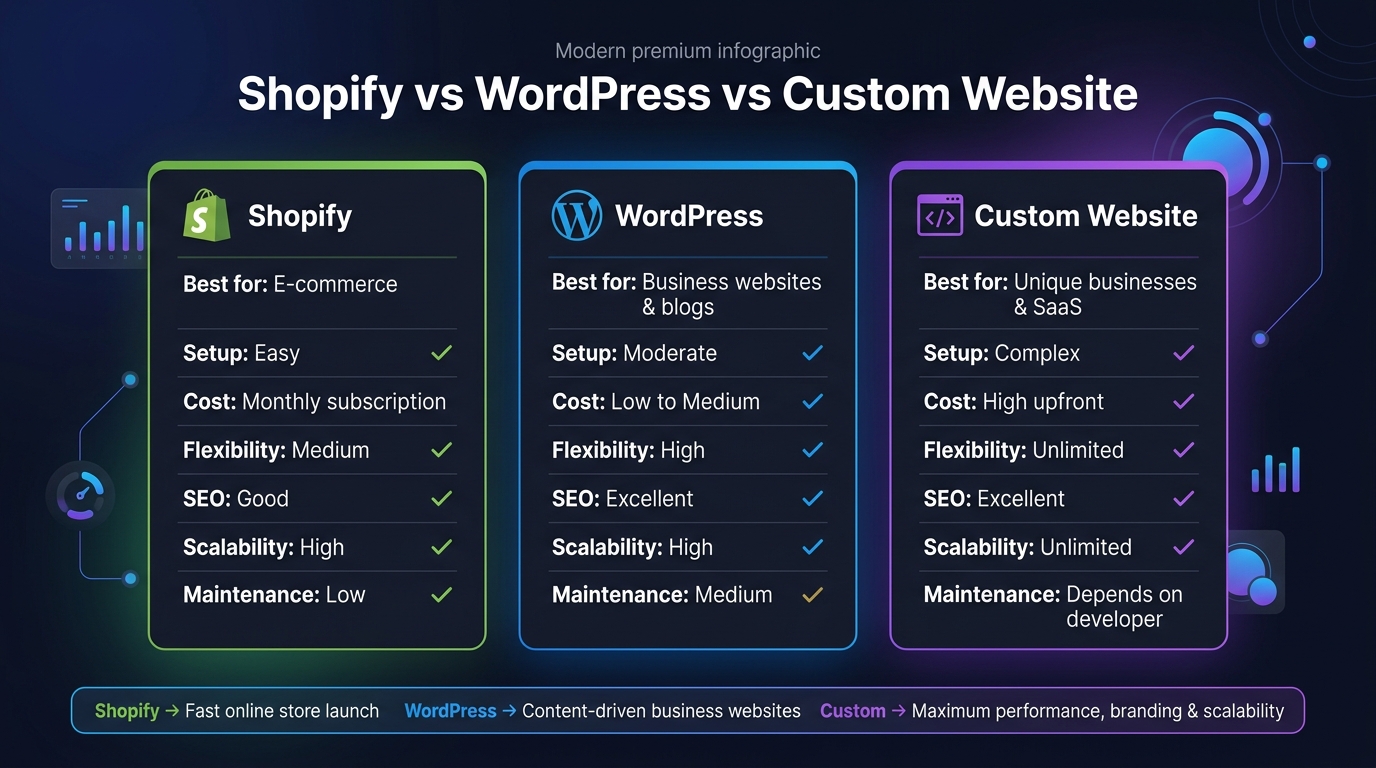
Shopify is an all-in-one e-commerce platform built specifically for selling products online. It handles everything from product listings and payment processing to shipping and inventory management, all in one system designed to get an online store running quickly.
Best for: Businesses primarily focused on selling products online, especially those who want a store up and running fast without dealing with technical setup.
Strengths:
Quick to launch, even with no technical background
Built-in payment processing, checkout, and inventory tools
Reliable hosting and security handled entirely by Shopify
Large app marketplace for adding extra functionality
Limitations:
Monthly subscription costs that scale up as you add apps and features
Less flexibility for highly custom designs or unique functionality
You're building on a platform you don't fully own or control
What Is WordPress?
WordPress is a flexible content management system that powers a huge portion of websites worldwide, used for everything from blogs and portfolios to business websites and online stores (via plugins like WooCommerce).
Best for: Businesses that want strong content and blogging capabilities, more design flexibility than Shopify, and a good balance between ease of use and customization.
Strengths:
Highly customizable through thousands of themes and plugins
Excellent for content-heavy sites and blogs, which pairs well with SEO strategy
One-time costs are generally lower than ongoing e-commerce platform fees
You own your website files and data outright
Limitations:
Requires more setup and occasional maintenance (updates, security, backups)
E-commerce functionality (via WooCommerce) needs more configuration than Shopify's built-in tools
Quality and performance can vary depending on which theme and plugins you choose
What Is a Custom-Built Website?
A custom website is built from scratch by a developer, without relying on a pre-built platform like Shopify or WordPress. Every element — design, functionality, backend structure — is built specifically for your business's needs.
Best for: Businesses with specific, complex requirements that off-the-shelf platforms can't easily handle, or those wanting complete control over performance, design, and functionality.
Strengths:
Complete flexibility — built exactly to your specifications
Can be optimized for maximum speed and performance
No ongoing platform fees or restrictions from a third-party system
Full ownership and control over every part of the site
Limitations:
Significantly higher upfront cost and development time
Requires ongoing technical support for updates and maintenance
Harder to make changes yourself without developer involvement
Quick Comparison
FactorShopifyWordPressCustom SiteBest forOnline storesContent & blogsUnique/complex needsSetup speedFastModerateSlowUpfront costLowLow-ModerateHighOngoing costMonthly feesLow (hosting)VariesFlexibilityLimitedHighCompleteTechnical skill neededMinimalSomeDeveloper required
Which One Should You Choose?
Choose Shopify if selling products online is your main goal and you want it live quickly without technical hassle.
Choose WordPress if you want a strong balance of content control, SEO flexibility, and moderate customization — especially if blogging or content marketing is part of your strategy.
Choose a custom site if your business has specific functionality needs that off-the-shelf platforms genuinely can't support, and you have the budget to invest in it properly.
Final Thoughts
There's no single "best" platform — only the best fit for your specific business goals, budget, and technical comfort level. Many businesses start with Shopify or WordPress and only move to a custom build once their needs outgrow what these platforms can offer.
The right choice comes down to one honest question: what does your business actually need right now, not just what sounds most impressive.
FAQ
Is Shopify better than WordPress for SEO? WordPress generally offers more SEO flexibility, especially for content-heavy sites, though Shopify has improved its SEO capabilities significantly in recent years.
Can I switch platforms later if my needs change? Yes, though migrating between platforms — especially to or from a custom build — can take time and often requires professional help to avoid losing content or SEO rankings.
Is a custom website worth the extra cost for a small business? Usually not, unless you have very specific functionality needs. Most small businesses are well served by Shopify or WordPress until they scale significantly.